Select a different country or region to see specific content for your location.
Five partners, one material loop: From Polystone® G HD PIR to Vislift
What does an innovative fish lift have to do with the circular economy? More than might be apparent at first glance. Together with our partners, Röchling demonstrates how recycled PE-HD can become a durable technical product for a practical application. At the heart of the project is Polystone® G HD PIR black extruded, a PE-HD sheet material containing 40 percent post-industrial recycled material.
An application that makes circularity visible
In the joint video, we follow the material through the different stages and show how recycling, material production, distribution, processing and application work together. The video includes footage at Röchling Industrial and the recycling site in Geeste-Dalum, as well as at Vink, Kuypers and Vislift.
The fish lift is the visible result of a value chain in which different areas of expertise come together: material production and recycling, distribution, processing, as well as the development and realisation of the final application. The shared objective is to combine technical performance with the responsible use of resources.
This is precisely what makes the project so compelling. Here, the circular economy is not an abstract concept. It becomes tangible through a specific material, real partners and a ready application.
High-quality recyclates for technical applications
Polystone® G HD PIR demonstrates how high-quality recyclates and technical requirements can go hand in hand.
The material behind the application
Polystone® G HD PIR black extruded is a high-density polyethylene PE-HD / PE 300 from the Röchling-ReLoop® portfolio. The sheet material contains post-industrial recycled material and has a recycled content of 40 percent. A life cycle assessment in accordance with ISO 14040/44 is also available for the material.
Its key properties include:
- Good welding and processing properties
- Particularly long-life, resilient and reduced maintenance effort and costs
- Does not corrode
- Good flatness and rectangularity
- Recyclable material
- Good chemical and UV resistance - even in contact with salt water, oil and fuels
This combination reflects what Röchling aims to achieve with its Röchling-ReLoop® product family: using high-quality recycled materials as an alternative to fossil-based primary raw materials while continuing to meet the technical requirements of the respective application.
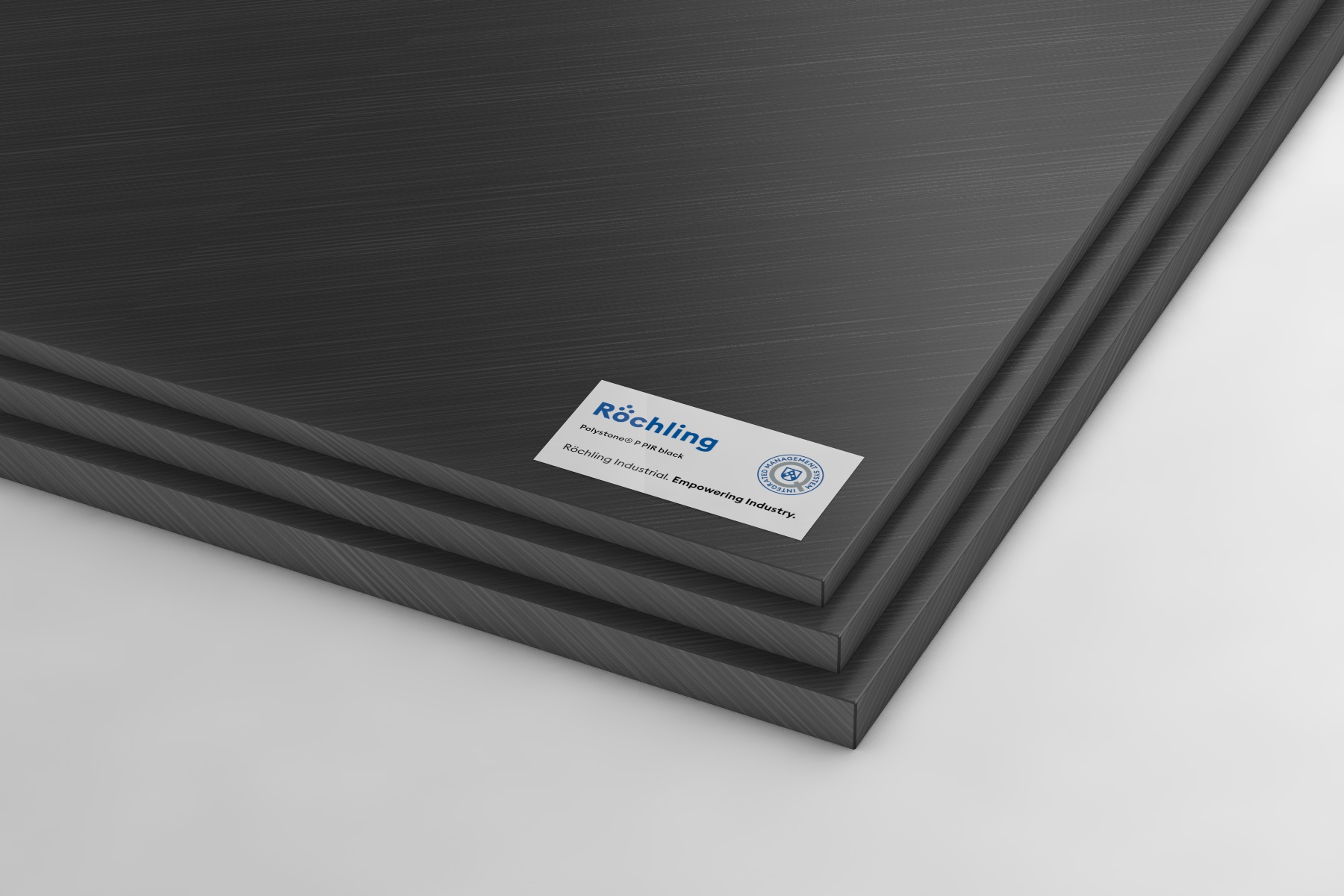
Product-Factbox
| Material | Polystone® G HD PIR black extruded |
| Material group | HDPE / PE 300 |
| Product form | Sheet |
| Recycling type | Post-industrial recycling |
| Recycled content | 40% |
| Colour | Black, similar to RAL 9005 |
| LCA | Available in accordance with ISO 14040/44 |
But where does this material loop begin?
Not with the fish lift. Nor with the production of a new sheet.
When semi-finished plastics are processed, offcuts, contours and other residual material are generated. These can be collected, reprocessed and used as input materials for high-quality recycled products.
This is where collaboration across the value chain comes into play. Suitable residual plastic material is collected and returned through the ReVink recycling programme. This allows it to enter a recycling process again rather than losing its value after a processing step
At the Röchling Sustainability Center in Geeste-Dalum, plastic residues are sorted, ground and processed into new raw materials. Röchling Industrial uses these materials to manufacture new, high-quality semi-finished products made of engineering plastics.
The Material Cycle: Step by Step
01 | Trace back
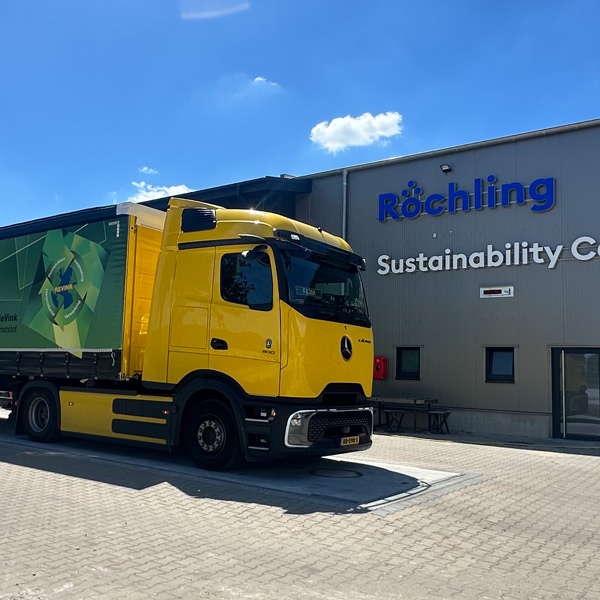
Through ReVink, suitable residual plastic material is collected and returned. This creates the basis for retaining materials beyond the end of a processing step and making them available again as input materials. The collaboration with Vink therefore forms an important part of the joint recycling loop.
02 | Material recycling
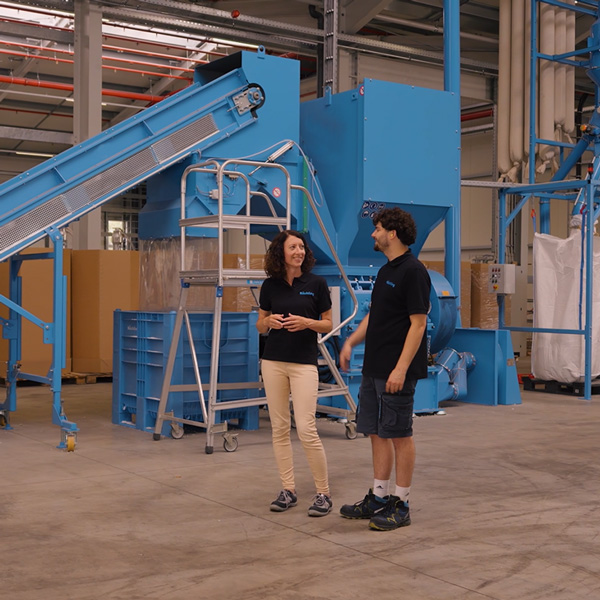
At the Röchling Sustainability Center in Geeste-Dalum, plastic residues are sorted, ground and processed into high-quality recyclates. The aim is to conserve valuable resources and create new input materials for high-quality plastic products.
03 | Manufacture new semi-finished products
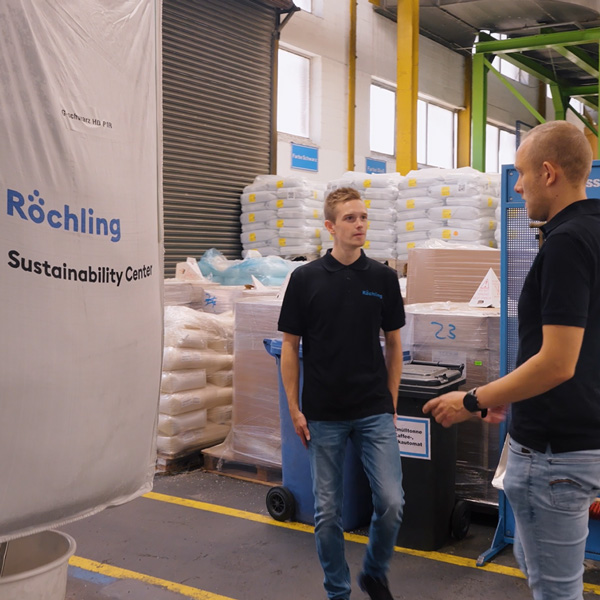
The reprocessed material can be used to manufacture high-quality semi-finished products. At the heart of the fish lift story is Polystone® G HD PIR black extruded, with a recycled content of 40 percent.
In this way, the concept of circularity material becomes a technical product once again, providing the basis for the next step in the value chain.
04 | Processing semi-finished sheets
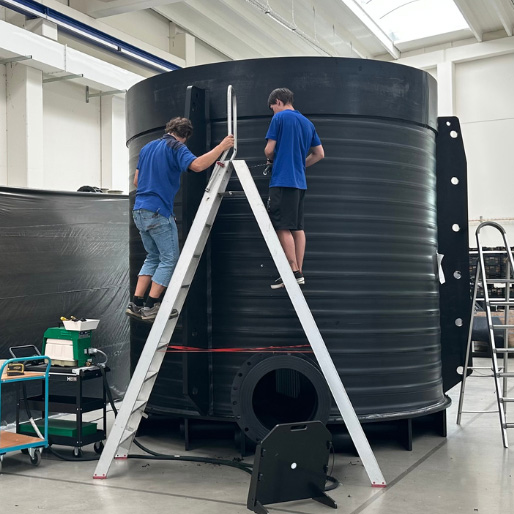
This is where the expertise of Kuypers Kunststoftechniek comes in. As processor and manufacturer, the company fabricates the sheet material for its subsequent application.
Properties of Polystone® G HD PIR like good weldability and easy processing support the fabrication of the sheet material. Chemical resistance and good mechanical properties are further characteristics of the material.
05 | Final application
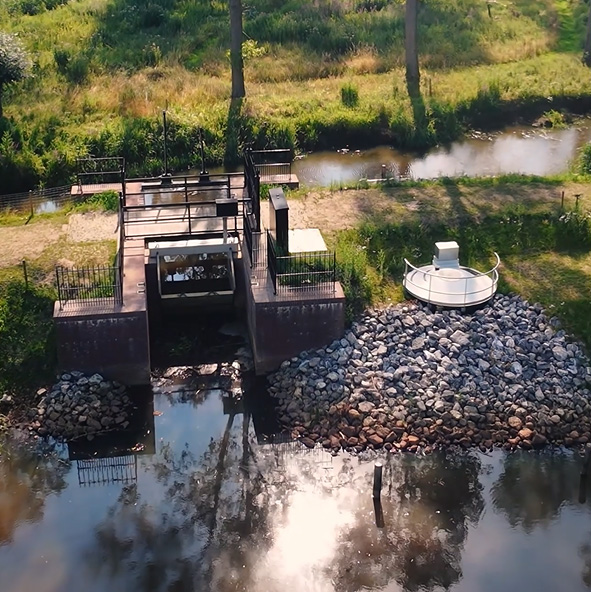
At the end of the value chain, the sheet material becomes a concrete technical solution: the fish lift from Vislift. It makes the entire story visible and demonstrates how a recycled material can find its way into a final application.
At the same time, the story does not end here. The idea behind the project is to consider materials and material streams beyond individual process steps, creating the conditions for functioning material loops.
Closing the loop together
Circularity works when the individual steps of the value chain are connected. In this project, every partner contributes its expertise: from returning and reprocessing plastic residues to producing and processing the sheet material and creating the final application. In this way, individual process steps become part of a shared material loop.

Röchling Industrial contributes material and recycling expertise.
Vink connects material and market and supports the return of suitable plastic residues through ReVink.
Kuypers processes the sheet material for the application.
Vislift makes the result of this collaboration visible in a finished application.
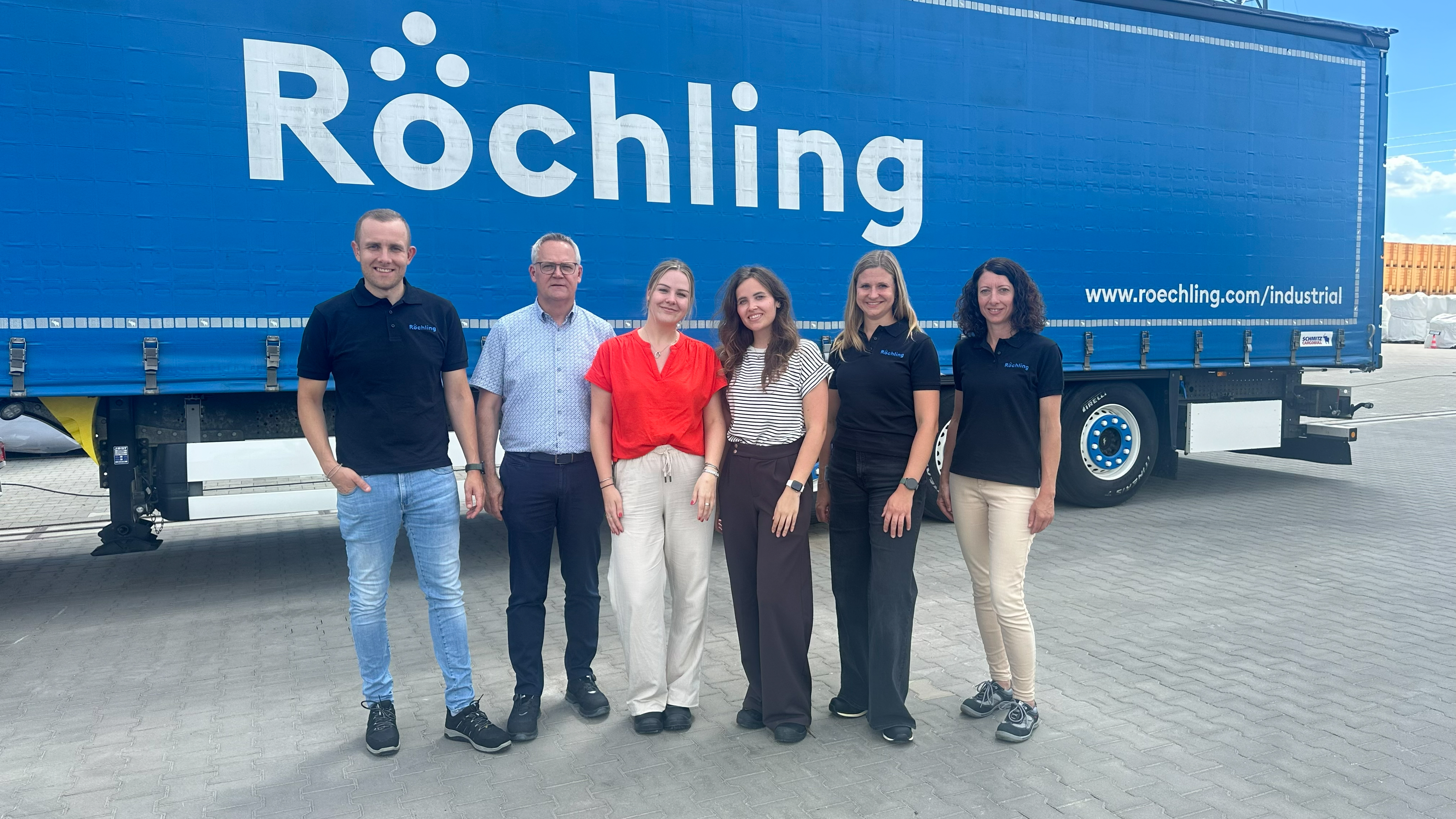
Röchling-ReLoop®: High-quality recycled materials for technical applications
The fish lift project demonstrates in a tangible application what Röchling-ReLoop® stands for: conserving valuable resources, closing material loops and making high-quality recycled materials available for technical applications. Sustainability and engineering go hand in hand. Alongside the responsible use of raw materials, our materials need to meet the technical requirements of the respective application.
Polystone® G HD PIR makes this approach tangible in the fish lift.
One step more. Taking material loops further together.
The fish lift is one concrete application. The idea behind it goes further: viewing plastic residues as valuable feedstock, retaining material value for as long as possible and working together to enable new technical applications
Would you like to explore the use of high-quality recycled materials for your application or establish a recycling loop together with us? Talk to our experts.